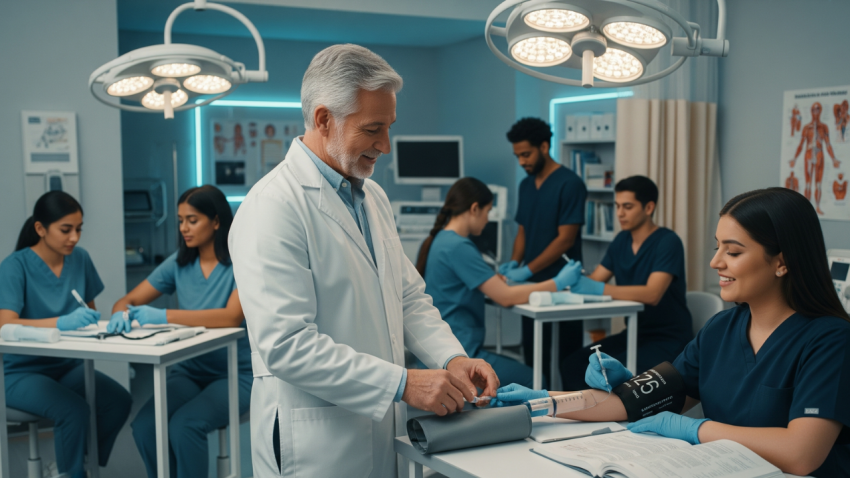
A career in healthcare can change lives. Many people want to work in this field because it gives them a chance to help others and build a stable future. One role that continues to grow is the job of a medical assistant. Classroom lessons give the foundation, but real progress happens when students take part in practical sessions. A Medical Assistant Training Program that includes both book learning and real-world practice prepares students for the fast pace of a clinic where accuracy and care matter every day.
Learning Beyond Books
Reading about patient care or medical tools only goes so far. Stepping into a lab or clinic helps students understand how those lessons work in real life.
Students get practice in areas such as:
- Taking vital signs
- Drawing blood safely
- Recording patient history
- Assisting doctors during minor procedures
When these tasks are repeated, the actions become natural. Students move from being unsure to handling tasks with skill and confidence.
Skills That Build Confidence
Healthcare staff need to make decisions quickly. Students who get real practice develop the confidence to handle patients with care and stay calm under pressure. A Medical Assistant Training program focuses on skills that employers expect new hires to know already.
Examples include:
- Preparing exam rooms before patients arrive
- Entering details into electronic health records
- Handling basic medical instruments
- Talking to patients in a clear and friendly way
These skills not only prepare students for daily work but also help them stand out during job interviews.
Real-World Practice
Moving from a classroom into a clinic can feel overwhelming. Programs that include externships or clinical rotations ease this shift. By working in a real medical office, students see how theory connects with practice.
During this stage, students often:
- Assist nurses and doctors with daily tasks
- Observe how medical offices run
- Support patients while supervised
- Gain tips from experienced healthcare workers
This type of exposure makes the first day on the job less stressful and much smoother.
Teamwork in Action
Medical assistants are part of a team that includes doctors, nurses, and office staff. Hands-on practice in a group setting helps students learn teamwork before they enter the workforce.
Through these group sessions, students:
- Learn to share tasks with others
- Support fellow students as they practice skills
- Improve patient communication through role play
- Build confidence to handle different situations together
Building Career Confidence
Graduates from a solid Medical Assistant Training Program don’t just walk away with a certificate. During Medical Assistant Training, students get to:
- Take vital signs like blood pressure and temperature
- Draw blood and handle lab samples
- Assist during exams and procedures
- Practice with electronic health records
These are not skills that can be mastered by reading alone. Repeating them in a real or simulated clinic builds muscle memory, which helps when students step into their first job.
Confidence with patients
Medical assistants are often the first point of contact in a clinic. Greeting patients, calming nerves, and explaining procedures all require confidence. Hands-on training offers plenty of patient interaction. By the time students finish, they feel more at ease speaking with people and making them comfortable.
Mistakes become lessons
Everyone makes mistakes when learning. In a Medical Assistant Training Program, mistakes happen in a safe environment where instructors guide students to improve. This feedback helps prevent errors later in real clinics, where accuracy matters most.
Bottom Line
Joining a Medical Assistant Training Program is more than a step into a new job. Classroom lessons provide knowledge, and on the other side, hands-on sessions turn that knowledge into real ability. For anyone aiming to become a medical assistant, practical training makes the difference between knowing what to do and being ready to do it with confidence.