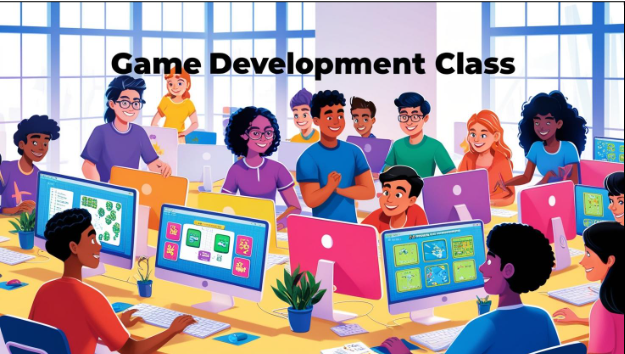
In the digital age, creativity and technical skills go hand in hand. As technology continues to shape the world at lightning speed, education systems and parents alike are rethinking how best to prepare the next generation. One area quietly revolutionizing youth education is game development classes. Once seen as a niche or hobbyist interest, these classes are now becoming powerful learning platforms that combine logic, design, storytelling, and coding. In fact, they’re fast emerging as the new STEM—and here’s why.
The Blending of Creativity and Technology
The traditional definition of STEM (Science, Technology, Engineering, and Math) has always emphasized analytical thinking and problem-solving. But the modern world demands more: creativity, adaptability, and digital literacy.
Game development classes uniquely offer this hybrid learning experience. Teens don’t just learn to code—they learn to build something engaging, often in collaborative environments. These projects involve logic and structure (technology and engineering), while also requiring storytelling and art direction (creativity and design).
This intersection is what sets game development apart. While traditional STEM paths might focus on isolated skills, game creation demands a multi-disciplinary mindset, similar to real-world tech projects.
Game Development as a Gateway to Broader Skills
Beyond just making games, students enrolled in game development classes learn:
1. Programming and Computational Thinking
Most platforms require teens to learn actual scripting languages such as C#, Lua, or Python. These languages lay the groundwork for understanding syntax, logic, algorithms, and data structures.
2. Storytelling and Narrative Design
Games aren’t just about mechanics—they’re about worlds, characters, and story arcs. Students develop storytelling skills, enhancing empathy, understanding narrative structure, and even psychology elements.
3. 3D Modeling and Digital Art
Teens use Blender or Photoshop to design environments, characters, and interfaces. This hones visual communication and design thinking skills, increasingly valued in industries from marketing to architecture.
Collaboration, Communication, and Leadership
Many game development classes emphasize team-based projects, simulating real-world development studios. Students may take on roles such as project manager, designer, coder, or artist. These setups encourage leadership, project management, and communication—critical 21st-century soft skills.
Just as STEM and robotics programs teach students to work in teams and iterate on engineering problems, game development promotes collaborative problem-solving with a creative twist.
Real-World Relevance and Career Pathways
Game development isn’t just fun—it’s big business. The global gaming industry surpassed $180 billion in 2024, outpacing even the film and music industries. And it’s not just about becoming a game developer.
Students trained in game development are well-suited for careers in:
- Software engineering
- UI/UX design
- Animation and VFX
- Data analysis
- Digital storytelling
- Cybersecurity programs, which increasingly value individuals who understand system architecture and interactive design
Because game development touches so many disciplines, it becomes a launchpad—not just into games—but into a multitude of tech careers.
Educational Engagement and Motivation
Let’s face it—traditional STEM courses can sometimes feel abstract or disconnected from students’ interests. Game development, however, starts with a hook: teens are already passionate about games. By meeting students where they are, educators can leverage this enthusiasm to teach complex concepts in a digestible and exciting way.
Suddenly, a lesson in physics isn’t just a theory—it’s the difference between a character flying or falling. A programming bug isn’t just an error—it’s the reason the game won’t load.
This immediate feedback loop and high level of personal investment lead to increased engagement, retention, and confidence.
Conclusion
As industries evolve and the demand for multi-skilled, creative, and technically literate professionals grows, we must evolve how we define and teach STEM.
Game development classes offer a dynamic, hands-on learning experience that mirrors real-world applications more accurately than many traditional courses. They blend logic with creativity, individual work with teamwork, and theory with implementation.
For teens, this isn’t just about learning to make games. It’s about developing a flexible, future-proof skill set that offers various career and educational opportunities.
In many ways, game development is the new STEM—and perhaps the most exciting evolution of it yet.