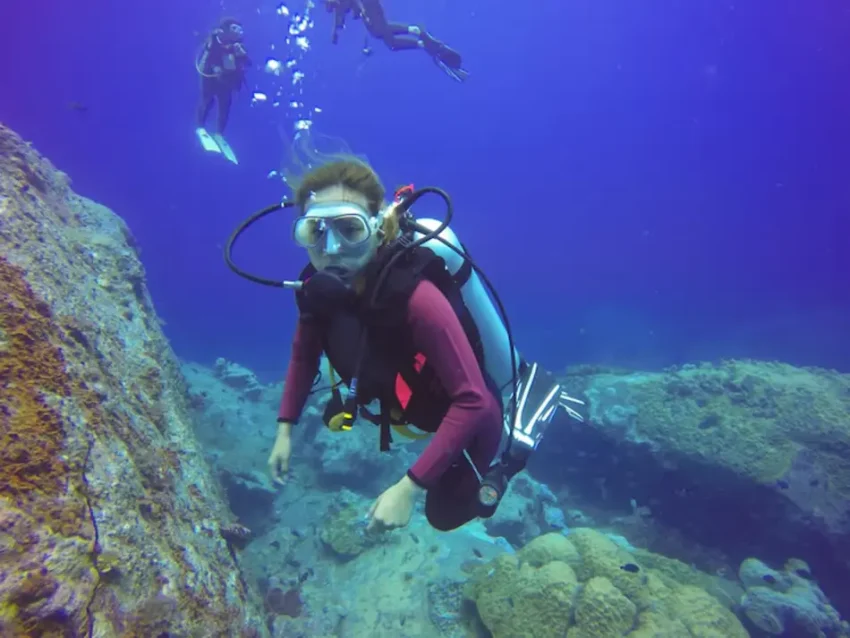
Most dive sites blend together in a traveler’s memory after a week of island-hopping, but there’s usually one site on any given trip that people specifically remember and mention by name afterward. On this stretch of the Andaman coast, that site is 8 Mile Rock, and it earns its reputation for reasons that go beyond just distance from shore.
What Makes This Site Different From the Rest
Sitting roughly eight nautical miles offshore, this granite pinnacle rises from deeper water and creates a genuinely different underwater environment than the more sheltered, shallower reefs closer to Koh Lipe. The depth and exposure to open water bring stronger currents on certain tides, along with the kind of pelagic activity that shallower, more protected sites simply don’t offer as consistently.
The Marine Life Draw
This is one of the more reliable spots in the area for encountering larger marine life — leopard sharks resting on sandy patches near the rock’s base, occasional manta ray sightings depending on the season, and dense schools of trevally and barracuda moving through the current. The rock formation itself is covered in soft coral and anemones, giving smaller reef species plenty of structure to shelter in, which means the site rewards divers paying attention to both the big picture and the small details of 8 Mile Rock.
Why It’s Not Typically a First-Dive Site
The current and depth here mean this isn’t usually where newly certified divers start their trip. Most operators reserve this site for divers with a reasonable number of logged dives and solid buoyancy control, since managing current while also staying aware of surroundings takes a level of comfort that’s harder to maintain on someone’s first few open water dives. Divers working through an advanced certification or already comfortable in more dynamic conditions tend to get the most out of what this site offers.
Timing the Visit Right
Conditions at this site shift noticeably with tide and season, and an experienced dive guide who knows the current patterns makes a real difference in timing the dive for the best visibility and calmest window. The dry season, roughly November through April, generally offers more predictable conditions here than the monsoon months, when stronger currents and reduced visibility can make the site considerably more demanding.
What a Dive Here Actually Feels Like
Descending along the rock’s structure, the first noticeable difference from shallower reef dives is the sense of open water beyond the formation — a reminder that this site sits further from the shelter of the coastline than most others in the area. Divers who’ve spent their trip on calmer, shallower reefs often describe this dive as a shift in intensity, with the current requiring more active navigation and the increased chance of larger marine life adding a different kind of anticipation to the dive.
Planning a Trip Around This Site
Because of the distance and conditions, trips to this location are typically scheduled as a dedicated excursion rather than folded into a standard two-dive day at closer sites. Divers interested in prioritizing this specific location can check scheduling and conditions through 8 Mile Rock diving trips to plan around the days when conditions and visibility are most favorable.
Why Divers Keep Coming Back to It
There’s a reason this site gets mentioned by name rather than lumped in with “the reefs around Koh Lipe” — the combination of current-driven marine life activity and the more dramatic underwater topography makes it stand apart from the calmer, shallower diving that makes up most of a typical trip here, and for divers with the experience to handle it, it’s often the dive they talk about longest after the trip ends.
