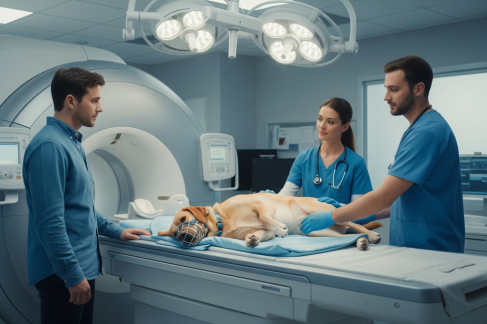
Advanced brain and spine imaging plays a critical role in modern veterinary neurology. When a pet develops sudden neurological symptoms—such as seizures, paralysis, or unexplained pain—basic tests like physical exams and X-rays are often not enough to identify the root cause. In these cases, advanced diagnostic tools such as MRI (Magnetic Resonance Imaging) and CT (Computed Tomography) become essential.
Understanding when your pet needs advanced imaging can help ensure timely diagnosis, faster treatment, and better recovery outcomes.
What Is Advanced Brain and Spine Imaging in Veterinary Medicine?
Advanced imaging refers to high-resolution diagnostic techniques used to examine the brain, spinal cord, and surrounding structures in detail.
The two most commonly used tools in veterinary radiology are:
- MRI (Magnetic Resonance Imaging) – best for soft tissues like the brain, spinal cord, nerves, and discs
- CT (Computed Tomography) – best for bones, fractures, tumors, and complex internal structures
These technologies are a key part of modern veterinary radiology, helping specialists detect neurological, musculoskeletal, and internal conditions with precision.
Why Advanced Imaging Is Important for Neurological Conditions
The nervous system is extremely complex, and even small abnormalities can lead to major symptoms. Advanced imaging helps veterinarians:
- Locate the exact source of neurological problems
- Differentiate between inflammation, tumors, and trauma
- Plan surgical or medical treatment accurately
- Avoid unnecessary or delayed treatment
Without imaging, many serious conditions may remain undiagnosed or misdiagnosed.
1. Sudden Paralysis or Weakness in Pets
One of the most urgent reasons for advanced brain and spine imaging is sudden paralysis.
Possible causes include:
- Intervertebral Disc Disease (IVDD)
- Spinal cord compression
- Stroke or vascular injury
- Trauma or spinal fractures
MRI is especially valuable in these cases because it shows soft tissue damage and spinal cord compression in detail.
If a pet suddenly cannot stand, walk, or move normally, imaging is often required immediately to determine whether surgery is needed.
2. Seizures or Unexplained Neurological Episodes
Seizures in pets can range from mild twitching to full-body convulsions. While occasional seizures may be due to metabolic issues, repeated or severe episodes often require brain imaging.
Advanced imaging can detect:
- Brain tumors
- Inflammation (encephalitis)
- Structural brain abnormalities
- Stroke or bleeding
MRI is the preferred tool for evaluating brain conditions because it provides high-resolution images of brain tissue.
If seizures begin suddenly or increase in frequency, advanced imaging becomes essential for diagnosis and treatment planning.
3. Severe or Chronic Neck and Back Pain
Pets suffering from spinal issues may show signs such as:
- Reluctance to move or jump
- Crying when touched
- Stiff posture
- Weakness in limbs
These symptoms may indicate disc disease, nerve compression, or spinal injury.
CT scans are often used when bone-related issues are suspected, while MRI is preferred for spinal cord and disc evaluation.
Early imaging helps prevent permanent nerve damage by identifying the exact location of the problem.
4. Suspected Brain Tumors or Spinal Tumors
Tumors affecting the brain or spine can cause a wide range of neurological symptoms depending on their size and location.
Common signs include:
- Behavioral changes
- Loss of coordination
- Vision problems
- Progressive weakness
- Seizures
Advanced imaging allows veterinarians to:
- Locate the tumor
- Determine its size and spread
- Decide whether surgery or radiation is possible
MRI is particularly effective for detecting brain tumors, while CT is often used for bone-related tumor evaluation.
5. Trauma or Accidents (Falls, Road Injuries, Impacts)
Pets involved in accidents often require urgent imaging to assess internal damage.
CT scans are especially useful for:
- Detecting fractures in the skull or spine
- Identifying internal bleeding
- Evaluating chest or abdominal injuries
Veterinary MRI in Maryland may be used later to assess soft tissue or nerve damage.
Even if a pet appears stable after trauma, internal injuries may still be present and require imaging for confirmation.
6. Unexplained Loss of Balance or Coordination
If a pet begins to walk in circles, stumble, or lose balance, it may indicate a neurological issue affecting the brain or inner ear.
Possible causes include:
- Brain inflammation
- Stroke
- Inner ear disease
- Tumors affecting balance centers
Advanced imaging helps determine whether the problem originates in the brain or elsewhere in the body.
This distinction is crucial for correct treatment.
7. Progressive Weakness or Worsening Mobility
Some pets develop gradually worsening symptoms over time, such as:
- Difficulty standing
- Dragging paws
- Reduced activity
- Muscle loss
These signs may indicate degenerative spinal conditions or chronic nerve compression.
MRI is the most effective tool for evaluating these progressive neurological diseases and guiding treatment decisions before permanent damage occurs.
8. When Blood Tests and X-Rays Are Not Enough
Veterinarians often begin diagnosis with basic tests like:
- Blood work
- X-rays
- Physical and neurological exams
However, these tests may not show soft tissue, nerve, or brain abnormalities.
If results are inconclusive but symptoms persist, advanced imaging becomes the next critical step. MRI and veterinary CT scan in Maryland provide the clarity needed for accurate diagnosis.
What Happens During MRI or CT Imaging?
Pet owners are often concerned about what the process involves.
Key steps include:
- The pet is placed under light anesthesia for stillness
- Imaging is performed in a specialized veterinary radiology suite
- MRI or CT scans are completed within 30–90 minutes
- A veterinary radiologist interprets the results
The procedure is generally safe and non-invasive, but requires careful monitoring.
Why Early Imaging Can Save Your Pet’s Life
Delaying diagnosis in neurological conditions can lead to permanent damage. Advanced imaging allows veterinarians to:
- Start treatment early
- Prevent irreversible nerve damage
- Improve surgical outcomes
- Increase chances of full recovery
In many cases, timing is the most important factor in successful treatment.
Final Thoughts
Advanced brain and spine imaging is one of the most powerful tools in veterinary medicine. It helps uncover hidden neurological conditions that cannot be diagnosed through physical exams alone.
If your pet shows sudden paralysis, seizures, unexplained pain, or loss of coordination, advanced imaging such as MRI or CT may be necessary to identify the cause quickly and accurately.
Early detection leads to better treatment options—and ultimately, a better quality of life for your pet. If you are looking for the best clinic for advanced brain and spine imaging, you can rely on VNIoC. For more information, visit the site.
